
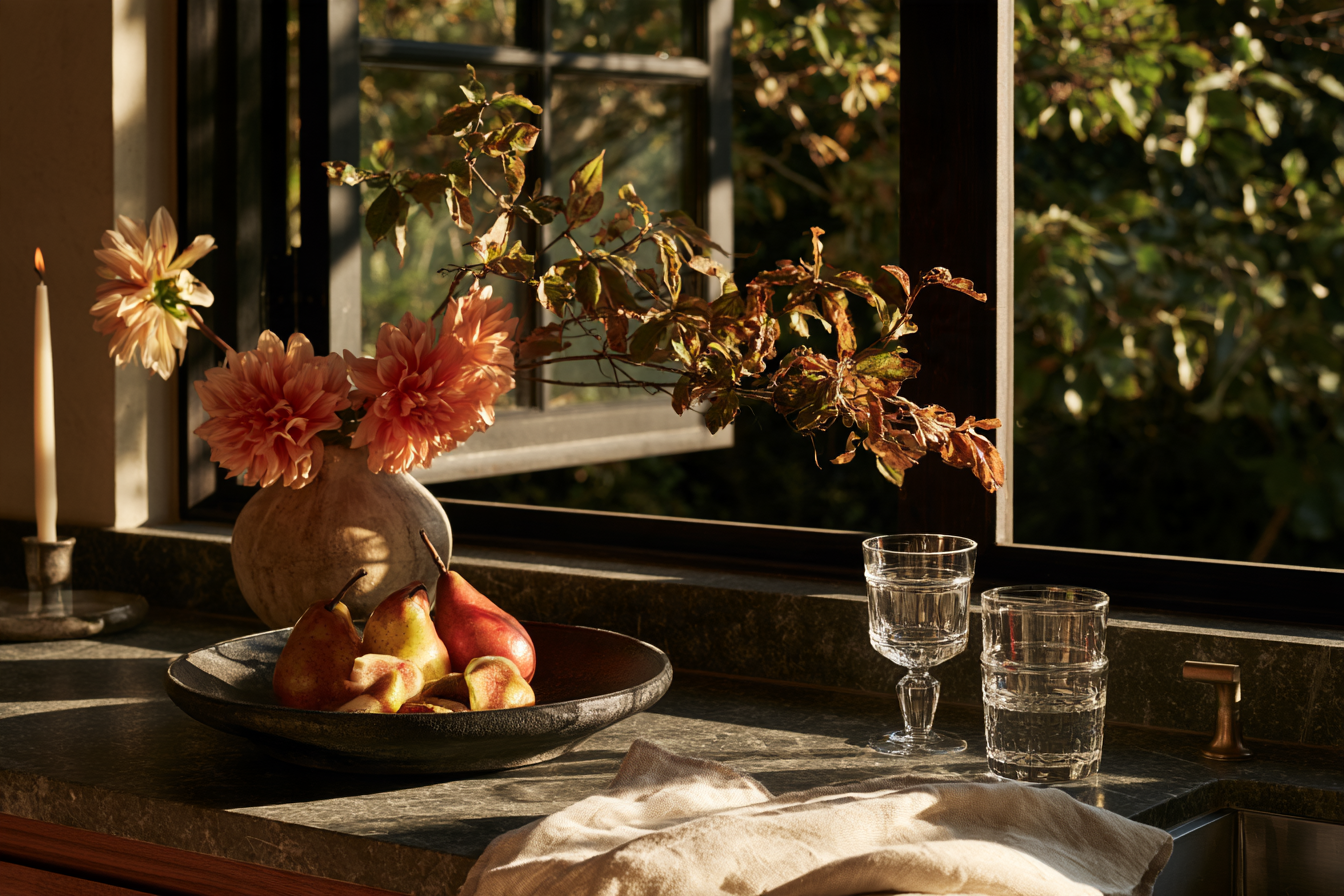
Fall isn’t all about pumpkin spice, scary movies, and Halloween. September sits in a quieter place between seasons. The afternoons can still feel warm, while the mornings begin to carry a chill. Leaves start to change and dry at the edges. The mornings are darker, the evenings arrive sooner, and the light begins to soften.
There are so many small seasonal changes that quietly walk us into fall.
Gardens begin to slow down. Tomatoes, herbs, and late-summer flowers are still hanging on while apples, pears, grapes, and figs begin to take their place. Farmers markets start to look a little different. We reach for a light sweater in the morning only to take it off again by afternoon. Windows can still stay open, but the air coming through them feels different.
Embracing that transition can bring a sense of peace and renewal. Although some may view it as a sad change—the weather becoming harsher and the daylight shorter—there is something grounding about noticing a season as it changes instead of rushing past it.
September does not need to feel fully autumnal yet. It is a month of overlap, and that is part of what makes it beautiful.
1. Follow the Changing Light
Instead of trying to hold onto summer light, embrace the softer rhythm September brings.
The difference often shows up first in the mornings and evenings. Breakfast may happen before the house is fully bright. Dinner begins to edge closer to sunset. The sharp, seemingly endless light of midsummer softens into something warmer and more directional.
The evenings arrive earlier, but they are not yet the long, dark evenings of winter. There is still time to leave a window open, enjoy the last light of the day, and then slowly bring warmth into the room.
Lamps can be turned on earlier. Candles can begin making their way back to the table. A small lamp in the kitchen, a candle beside a stack of books, or warm light in the dining room can change the feeling of the house before the temperature truly drops.
Even the act of lighting a candle can become part of the seasonal shift. A beautiful match holder or striker turns something practical into a small object worth leaving out.
These small shifts create warmth while bringing intimacy, drama, and comfort into the home.
2. Bring in Warmer Materials
September is not the time to pack away every trace of summer and replace it with heavy fall décor.
Instead, begin adding a little more weight.
Keep the linen, but pair it with darker wood. A pale tablecloth can sit beneath walnut serving pieces. Light ceramics can be mixed with stone, brass, or smoked glass. Cotton throws can be replaced with something slightly heavier. A woven basket, substantial bowl, or deeper-toned tray can begin to ground a room without making it feel dark.
September works especially well when materials from both seasons sit together.
The lighter textures of summer do not need to disappear. They simply begin sharing space with richer ones.
Each shift may feel subtle on its own, but together they make the home feel more grounded and ready for fall.
3. Let September Become the Decoration
When you look at an elevated space, what do you notice? It is rarely overly themed or decorated. It feels collected and curated.
September gives us plenty to work with on its own.
Late-summer flowers can sit beside branches just beginning to turn. Dahlias, zinnias, sunflowers, herbs, and grasses can still feel appropriate while leaves begin to bronze at the edges.
In the kitchen, apples, pears, grapes, figs, squash, or the last tomatoes of the season can become part of the room rather than something that needs to be hidden away. A bowl of pears on a stone counter or a few branches cut from outside can often feel more seasonal than anything purchased from a décor aisle.
This is also the month when the colors outside begin to shift gradually. Green is still present, but it becomes deeper and dustier. Gold, rust, plum, brown, and muted red begin appearing in small amounts.
Using what is naturally available creates a more authentic seasonal atmosphere. Instead of decorating for fall, the changing season becomes part of the decoration.
4. Make the Table Feel Slightly Richer
September is the time to move away from the lightest days of summer without jumping straight into the deepest colors of autumn.
The table can begin to feel richer and more substantial.
A summer table might have been pale linen, clear glass, fresh greenery, and bright fruit. In September, those same elements can simply deepen.
Crystal can stay, especially pieces with enough texture to catch the softer evening light. A set of crystal highball glasses can feel just as appropriate holding a late-summer drink as something richer later in the season.
Linen can move from bright white into cream, oat, olive, tobacco, or muted plum. Flowers can become more sculptural and less delicate. A bowl of pears or grapes can replace citrus at the center of the table.
Even the menu begins to shift. Crisp salads and cold dishes start sharing space with roasted vegetables, bread, pasta, soups, and food that has been allowed to cook a little longer.
It may be as simple as adding a beautiful menu or place card, changing the linens, or lighting candles at dinner again.
It does not need to be a complete redesign. Sometimes a few thoughtful shifts are enough to make the table feel connected to the season.
5. Return to Evening Rituals
September often brings a return to routine.
School starts again. Work schedules settle. Trips begin to slow down. Weekends feel a little more structured, and home starts to become the center of things again.
Dinner moves indoors more often. Evenings feel quieter. The pace begins to change after the looseness of summer.
This can be the time to return to small evening rituals: lighting candles before dinner, cooking something a little slower, opening a bottle of wine, setting the table even when there is no occasion, or simply sitting down together instead of eating on the go.
On evenings warm enough to stay outside, glass hurricane candle holders can protect the flame while letting dinner stretch a little further past sunset.
And when the evening is over, even extinguishing the candles can become part of the ritual. A sculptural brass candle snuffer is the kind of small, slightly unexpected object that can make an everyday routine feel more considered.
Maybe the windows are still cracked open while dinner cooks. Maybe there is a sweater thrown over the back of a chair for later. Maybe dessert is eaten outside even though the sun has already gone down.
September still holds pieces of summer, but they are beginning to feel fleeting.
That is exactly what makes them worth noticing.
September does not ask us to completely change the way we live. Its arrival is quieter than that.
It shows up in the first cool morning, the earlier sunset, the last tomatoes on the counter, the bowl slowly filling with apples instead of peaches, and the candle lit at dinner simply because the room has grown dim.
The transition into fall is less about decorating for a season and more about paying attention to it.
There will be plenty of time for heavier layers, darker evenings, and everything that comes later in autumn. For now, September gives us something different: a few fleeting weeks when summer and fall exist side by side.
And perhaps the best way to welcome the season is not to rush toward what comes next, but to notice where we are.