
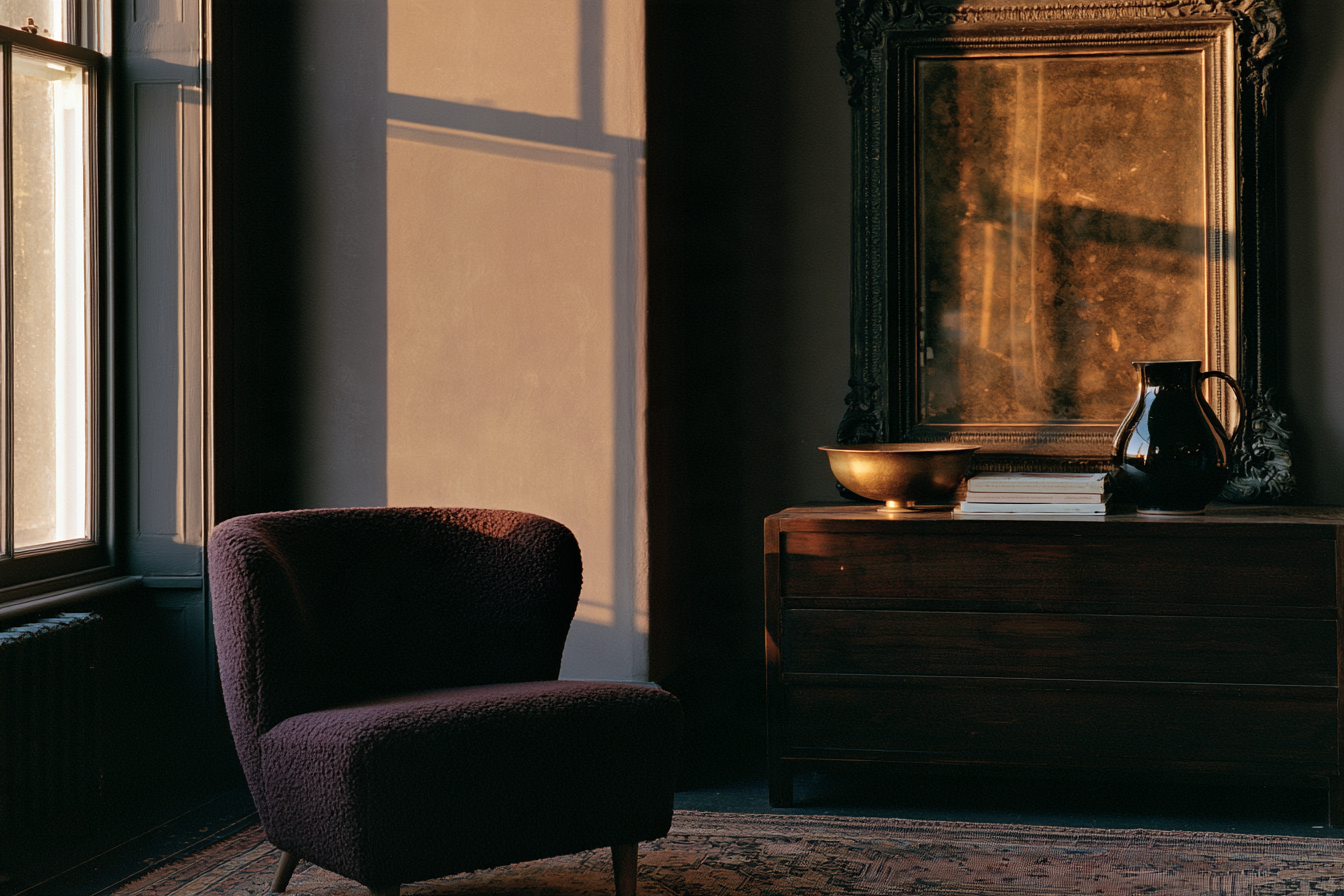
October begins the deep season
September let you pretend. It’s sneaky that way, easing you into the month still feeling warm and vibrant. Summer’s habits were still on the table and fall’s were only just arriving, and a house could hold both. October doesn’t allow that. It’s strong, stern and solid. It is the month of putting up: jars, cedar chests, dried things hung in windows. The year turns inward, and what a house does best, for a few weeks, is deepen. It starts collecting for its season, the long and dark one.
That is the claim of this Edit: October is when a house stops displaying and starts deepening. Look at what the month asks for and nearly all of it is meant to be kept and carried through the season. Figs are dried. Cloves are a spice people used to preserve. Leather is hide tanned so it won’t rot. Cedar is the wood your grandmother put in the chest. The antiqued mirror is silver that has aged. The black glaze is clay that fire made permanent. Even the sound is kept, in the grooves of a record.
The palette follows. Deep October has three notes. Smoked fig is the base, a purple-brown that is deeper and drier than plum. Clove brown is the secondary, the color of something spiced and old. Tangerine peel is the disruptive note. The colors are the skins of kept things: dried fruit, tanned hide, aged spice. And the tangerine rarely shows up as an object. It shows up as the last low light of the day, a single napkin, or the lantern husk of a dried physalis.
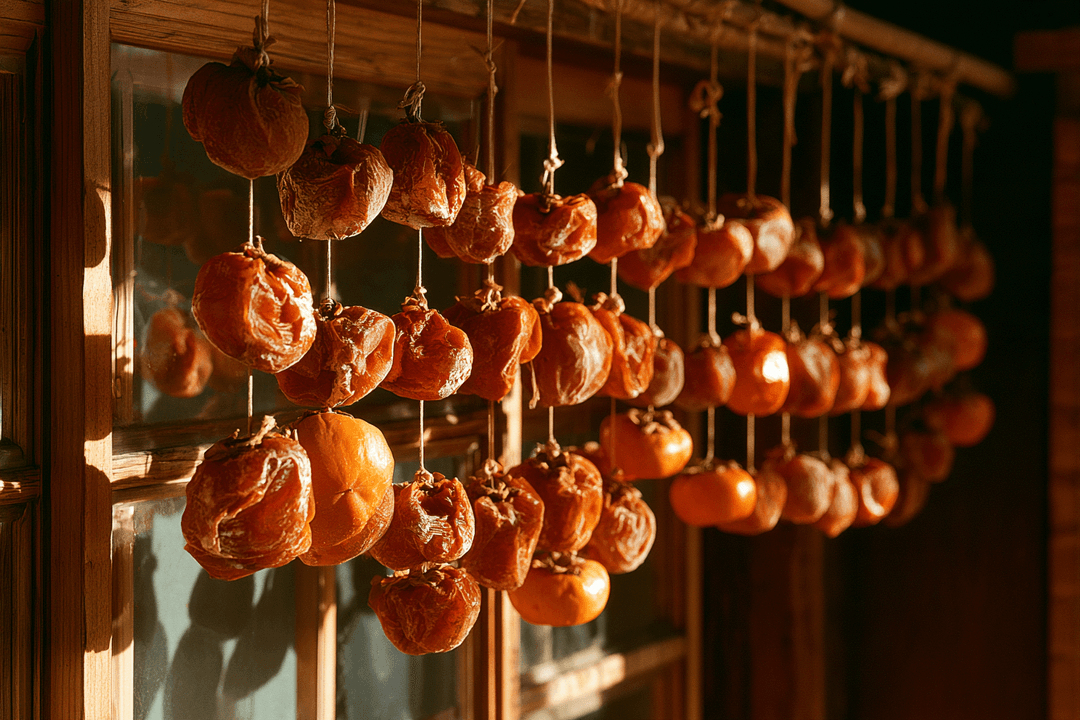
October’s best food trick is patience. The Japanese call it hoshigaki: persimmons peeled, strung and hung to dry for weeks, until the hard orange turns soft, dark and sugar-bloomed. Nothing is added. The fruit is mostly left alone, with a gentle massage now and then, and it deepens.
That’s the whole month in one fruit, and you can borrow it without making a single one. Cut persimmon branches with the fruit still on do the same work in a room, orange against bare wood. Hang them, lean them, lay them along a shelf. No vase needed. Fig branches with the leaves going yellow and a few dried physalis husks, the little paper lanterns, can join them, but the persimmon is the point.

October smells like being looked after. Think of the old chest: leather that’s been tanned so it won’t rot, cedar, the wood people trusted to keep wool safe, and a spice that’s been used to preserve food for centuries.
The wool is where the bouclé throw in smoked fig comes in. It’s thick, looped and matte, the one surface in the month that absorbs light instead of bouncing it. Put it where the lamp falls and a hard reflection turns into a soft gradient. It’s what a deep season needs, something to sink into.
The spice is clove, and the classic way to use it is the pomander, a clove-studded orange once carried to guard against infection. Press whole cloves into an orange until the peel is armored, leave it where the oven’s warmth can reach it, and it’ll scent a house better than any candle.
October holds onto light two different ways. One is silver and the other is stone.
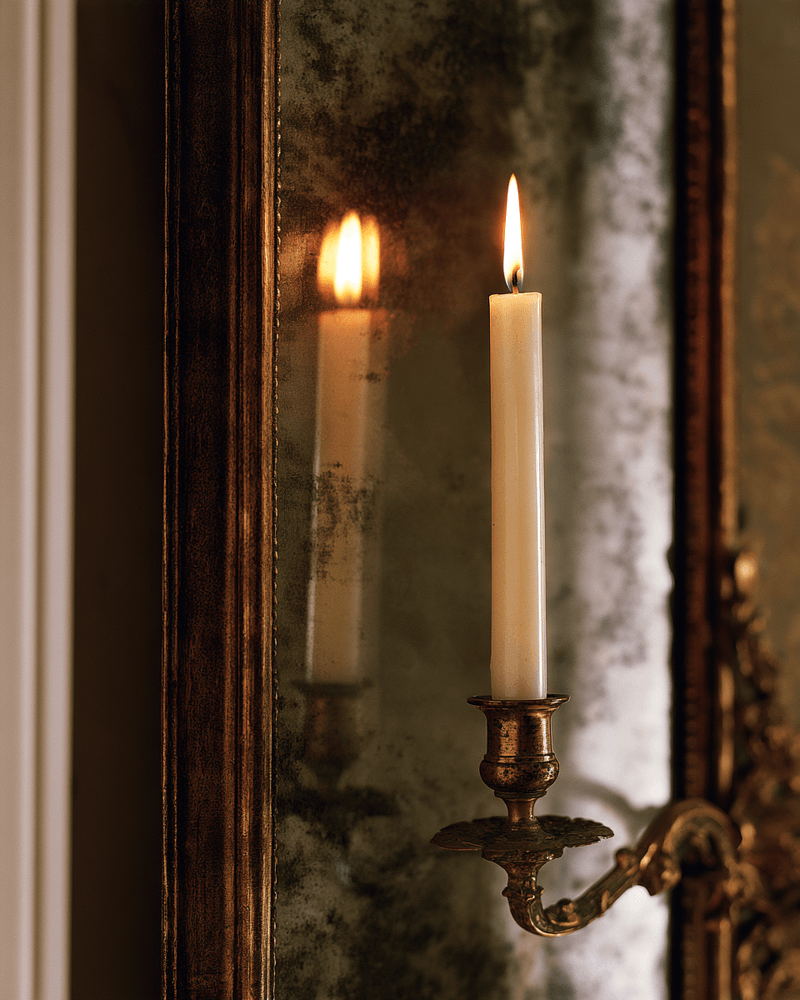
The antiqued mirror holds light by reflecting it. Old mirrors get “foxing,” the dark, freckle-like spots where the silvering breaks down, and the result holds light like a lake instead of like a window. Rooms used to depend on mirrors that way. Before electric light, a girandole was a wall sconce backed in mirror so one candle looked like two or three, and a pier glass was a tall mirror hung on the wall between two windows. The girandole wasn’t decoration, it was lighting. A mirror-backed brass sconce is its direct descendant, and the antiqued mirror tray does the same job at table scale.
Honey onyx holds light by letting it in. Onyx is banded stone laid down slowly in layers, and honey onyx is translucent: lean a slab or a small tray against a window and the late light goes straight through it and glows honey-amber. (Onyx is soft, and acid and alcohol etch it, so it belongs on a sill, not the bar tray.)
Fire doesn’t only destroy, it fixes. October trusts it the way it trusts everything that lasts.
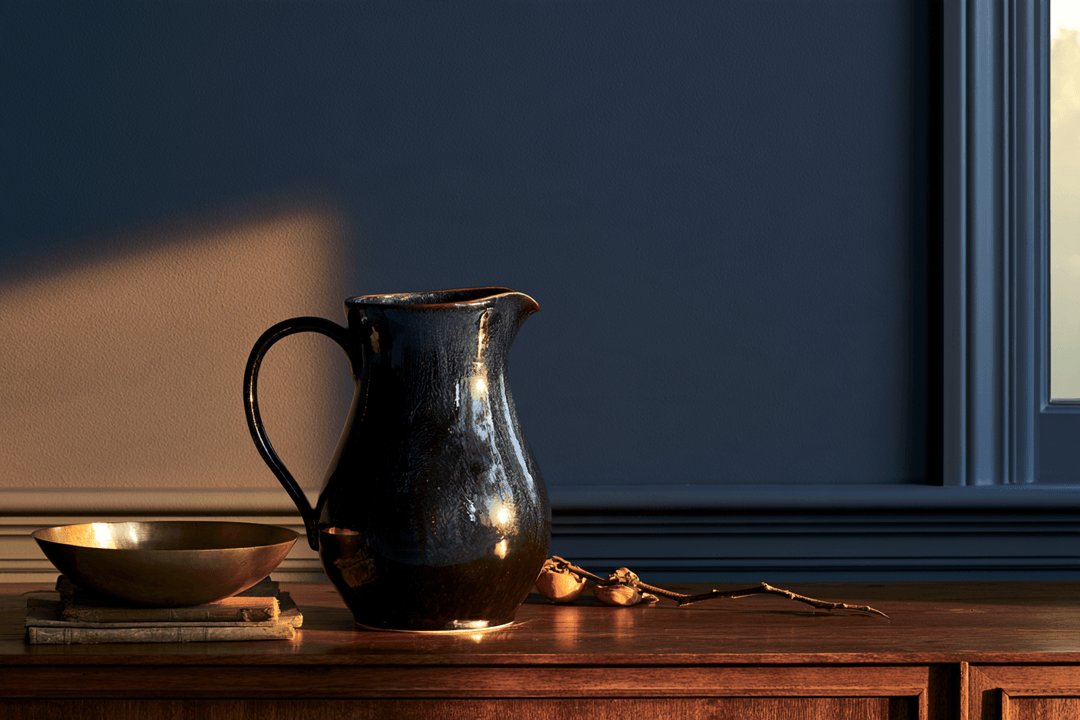
The black-glazed pitcher is the proof: clay that fire made permanent. It’s a deep, reflective black with a little brown showing when the lamp hits it, and it holds water or wine and works as sculpture between courses.
Fire also makes the signature drink. A flamed-orange old fashioned is rye or bourbon, a little sugar and bitters, then a strip of orange peel held over the glass and warmed until the oils catch. The peel holds the fruit’s oils, and for one second they become the smell of the whole room: tangerine, smoke, a flicker.
October sounds like a record. A record keeps a performance, the exact night someone played it, and plays it back whenever you ask.
It’s also the slowest way to listen. You have to get up, drop the needle, and come back in twenty minutes to turn it over. October is the month to do that properly, up front and not in the background: a piano trio, a cello suite, an Ethiopian jazz record with room in the groove. Music with space in it, loud enough that people lean in.
All of that collecting is for something. A deep season isn’t meant to be waited out alone, it’s meant to be spent on people, and the place to spend it is the table. That’s where the colors, the glaze and the light all land, and where October stops being a mood and becomes an evening.
October doesn’t ask you to wait out the dark. It asks you to fill the room for it, with kept things and people you want there. The deep has begun.